5 Industries That Benefit Most from Drone Services
Surveying
Drone technology has rapidly evolved from a niche innovation into a practical business tool used across a wide range of industries.
Introduction
Organizations are increasingly turning to drones to collect data, improve safety, reduce costs, and gain valuable insights from an aerial perspective.
What makes drones so versatile is their ability to access hard-to-reach areas, capture detailed imagery, and gather information quickly and efficiently. From construction sites and farmland to power infrastructure and marketing campaigns, drones are helping businesses work smarter and make better decisions.
Here are five industries that benefit the most from professional drone services and how they use this technology to solve everyday challenges.
Construction
The construction industry relies heavily on accurate site information, progress tracking, and project oversight. Traditional site inspections often require significant time, labor, and resources, especially on large-scale developments.
The Challenge
Construction managers need to monitor project progress, identify potential issues, and keep stakeholders informed. Walking large sites manually can be time-consuming and may not provide a complete overview of the project.
How Drones Help
Drones provide aerial views of construction sites, allowing teams to monitor progress quickly and accurately. They can capture images, videos, and mapping data that help managers compare completed work against project plans.
Benefits include:
Faster site inspections
Improved project tracking
Better communication with stakeholders
Enhanced documentation
Reduced surveying time
By providing a comprehensive view of the entire site, drones help construction teams stay informed and make timely decisions.
Agriculture
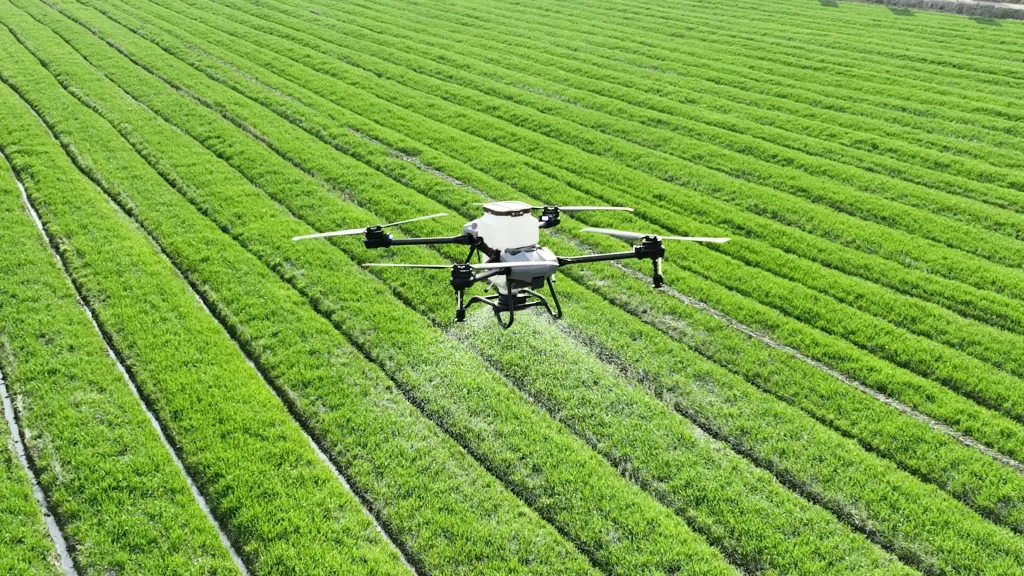
Modern farming depends on accurate information about crop health, soil conditions, and resource management. Monitoring large agricultural fields manually can be challenging and inefficient.
The Challenge
Farmers need to identify issues such as irrigation problems, pest infestations, and crop stress before they impact yields. Detecting these problems early can be difficult when covering large areas.
How Drones Help
Drones can quickly survey fields and collect valuable agricultural data. High-resolution imagery helps farmers identify problem areas and take corrective action before issues spread.
Benefits include:
Improved crop monitoring
Early problem detection
More efficient resource use
Better irrigation management
Increased productivity
With drone technology, farmers can make data-driven decisions that improve efficiency and support healthier crops.
Real Estate
In a competitive property market, presentation plays a major role in attracting potential buyers and investors. Traditional photography often struggles to showcase the full value of a property and its surroundings.
The Challenge
Buyers want a complete understanding of a property's size, location, and nearby amenities. Standard ground-level photos may not provide enough context.
How Drones Help
Drone photography and videography offer a unique perspective that highlights both the property and its environment. Aerial visuals can showcase landscapes, neighborhoods, and key features that would otherwise be difficult to capture.
Benefits include:
More attractive property listings
Better visualization of land and surroundings
Increased online engagement
Enhanced marketing materials
Improved buyer experience
Professional drone content helps properties stand out in crowded markets and creates stronger first impressions.
Energy and Utilities
Energy companies and utility providers manage large networks of infrastructure that require regular inspections and maintenance. Traditional inspection methods can be costly, time-consuming, and potentially hazardous.
The Challenge
Inspecting power lines, solar farms, wind turbines, and utility infrastructure often requires specialized equipment and exposes workers to safety risks.
How Drones Help
Drones can inspect critical assets from a safe distance while capturing detailed imagery and video. This allows maintenance teams to identify issues without interrupting operations or placing personnel in dangerous situations.
Benefits include:
Improved worker safety
Faster inspections
Reduced maintenance costs
Better asset management
Early detection of potential failures
By simplifying inspection processes, drones help utility providers maintain reliable operations while minimizing risks.
Media and Production
The media industry constantly seeks creative ways to capture engaging content. Traditional aerial filming often requires helicopters or expensive equipment, making high-quality aerial footage inaccessible for many projects.
The Challenge
Producing cinematic aerial content can be expensive and logistically complex using conventional methods.
How Drones Help
Drones enable filmmakers, content creators, and production companies to capture professional aerial footage at a fraction of the traditional cost.
Benefits include:
Cinematic camera movements
Unique visual perspectives
Lower production costs
Faster setup and deployment
Greater creative flexibility
From commercial advertising to documentaries and social media campaigns, drones have become an essential tool for modern content creation.
Why More Industries Are Adopting Drone Technology
The growing adoption of drones across industries is driven by several key advantages:
Faster data collection
Reduced operational costs
Improved workplace safety
Access to hard-to-reach areas
Better decision-making through visual data
Increased operational efficiency
As drone technology continues to advance, businesses are discovering new ways to integrate aerial solutions into their daily operations.
Conclusion
Drone services are no longer limited to aerial photography. Today, they provide valuable solutions for industries ranging from construction and agriculture to energy, real estate, and media production.




(1k Reviews)
Trusted by 2,000 users
Book a free 30-minute drone strategy session and discover how Dronica can help you reduce operational costs.